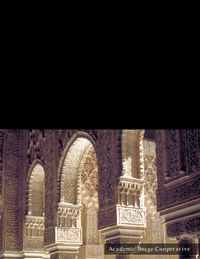
AIC Brochure
Jan 2000

The AIC is led by the Digital Library Federation (DLF) with support from the College Art Association (CAA). Funded to July 2000 by The Andrew W. Mellon Foundation and the DLF, and with contributions from Yale and Carnegie Mellon Universities, the AIC is presently developing a prototype. The prototype is envisaged as a working system exemplifying what may be achieved in a networked environment by and for the visual arts community. It is a collection of images and a set of tools that may be ...
The Making of America II Testbed Project: A Digital Library Service Model
Dec 1999

The work of the Making of America II Testbed Project reported in this paper represents a singular effort in digital library development to find ways to provide access to and navigate a variety of materials. In this endeavor, a digital library service model has been defined that encapsulates the interaction of digital objects (including their metadata), tools, and services based on principles of object-oriented design. In developing the digital library service model, project participants di...
Building Preservation Knowledge in Brazil
Nov 1999

The project to translate into Portuguese and disseminate preservation knowledge was part of a broader partnership between the Council on Library and Information Resources, which incorporates the former Commission on Preservation and Access, and a consortium of Brazilian archival, library, and museum institutions. The partnership was intended to serve as an information network for preventative conservation for all Brazilian institutions with collections on paper and film and in digital form...
Innovative Use of Information Technology by Colleges
Aug 1999

This report contains nine case studies of colleges and mid-sized universities whose libraries have used new information technologies to improve education on their campuses. Funded by a grant from the W. K. Kellogg Foundation, members of CLIR staff and one of its advisory groups, the College Libraries Committee, studied the experience of college libraries that use new information technology to enhance library services and provide information resources to students and faculty in innovative w...
Digital Certificate Infrastructure: Frequently Asked Questions
Aug 1999

Providing secure, low cost, and easy access to distributed instructional and research resources is a growing problem for campus library and information technology professionals. This FAQ provides information on the use of digital certificates as a means of authentication for distributed access to resources. It is designed for two audiences: university librarians and staff responsible for licensed content contracts, and university administrators—presidents, provosts, and directors of campus...
Securing Our Dance Heritage: Issues in the Documentation and Preservation of Dance
Jul 1999

Securing Our Dance Heritage focuses on the documentation of, access to, and preservation of our dance heritage. It is coauthored by an eminent dance ethnologist and a leader in the field of dance librarianship. In the first chapter, Allegra Fuller Snyder discusses the cultural and intellectual value of dance and articulates what elements of dance should be recorded and made accessible so that scholars, performers, creators, and the public can grasp fully the rich history of human expressio...
Preserving the Whole: A Two-Track Approach to Rescuing Social Science Data and Metadata
Jun 1999

Focusing on the experience of the Yale University (Connecticut) social science data preservation project, this document presents a case study of migration as a preservation strategy, exploring options for migrating data stored in a technically obsolete format and their associated documentation stored on paper. The first section provides background and a project description, an overview of the Yale Roper Collection of public opinion research data sets and paper records, and a summary of the...
The Future of the Past: Preservation in American Research Libraries
Apr 1999

This paper gives an overview of the preservation and management of research collections and describes the context in which decisions are made by researchers and librarians about what to preserve and how. By examining how librarians and scholars grappled with the first great crisis in the preservation of library materials-the pandemic loss of information printed on embrittled acid paper-it traces the development of the current consensus on how to manage large collections recorded on many me...
Digitization for Scholarly Use: The Boswell Papers Project at The Beinecke Rare Book and Manuscript Library
Mar 1999

This paper reports on the digitization of manuscripts from the Boswell Collection by The Beinecke Rare Book and Manuscript Library at Yale University. The paper is one of a series that CLIR is publishing in order to explore strategies for integrating digital technology into the management of library print and media collections. In this case, the digitization process was designed to serve a group of scholars already at work on a publication series, and so distinguishes itself from many othe...
Why Digitize?
Feb 1999

This paper is a response to discussions of digitization at meetings of the National Humanities Alliance (NHA). NHA asked the Council on Library and Information Resources (CLIR) to evaluate the experiences of cultural institutions with digitization projects to date and to summarize what has been learned about the advantages and disadvantages of digitizing culturally significant materials. Findings revealed that digitization often raises expectations of benefits, cost reductions, and efficie...
Enabling Access in Digital Libraries
Feb 1999

The workshop described in this report focused on the management of access to published information resources through research libraries. Topics discussed include privacy, protection of rights, authorization, and authentication.
Among the groups seeking to meet the challenge of access management are the Digital Library Federation (DLF), which consists of major research libraries and archives in the United States, the Center for Research on Information Access (CRIA) at Columbia Univer...
Scholarship, Instruction, and Libraries at the Turn of the Century
Jan 1999

To understand how technology is changing the nature of scholarship and teaching, the American Council of Learned Societies (ACLS) and the Council on Library and Information Resources (CLIR) joined forces to establish five task forces that examined these questions by looking at the special requirements posed by different types of information resources. The deliberations of these task forces are detailed in this report.